
A Root Canal Without the Dread
Saving Your Natural Tooth
SMILE BRILLIANTLY, Live Beautifully.
Saving Your Tooth, Without the Drama
A root canal is the procedure that lets you keep a tooth that would otherwise have to be extracted. That's the part people forget when they brace for the appointment.
The alternative is not doing nothing. It is losing the tooth and needing a larger replacement plan later.
Modern root canal therapy is nothing like the procedure people grew up dreading. With thorough anesthesia, digital imaging, rotary instruments, and sedation options when needed, the procedure is often calmer than the toothache that brought you in.
We numb the area, remove the infected pulp inside the tooth, clean and disinfect the canals, and seal them. Many root canals are completed in a single visit.
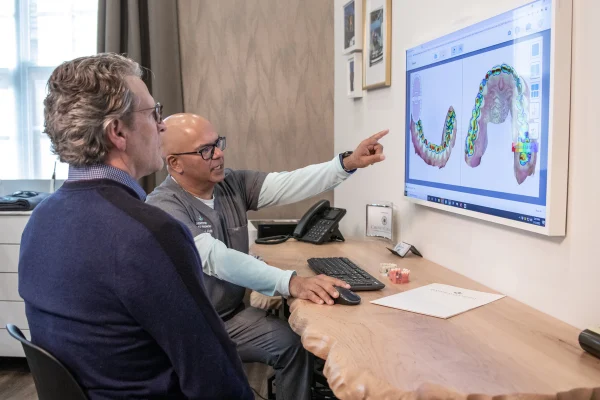
After treatment, the tooth typically needs a crown to protect it long-term, which we can usually place the same day using CEREC technology. The result is a saved natural tooth that functions normally for years to come.



Why Choose Dentistry at East Piedmont for Your Root Canal

Dr. Ashish Patel
Most root canals at Dentistry at East Piedmont are completed in a single visit, with the protective crown placed the same day using CEREC technology.
FOUNDED 2001 · 3 DOCTORS · REAL PATIENT SMILES ONLY
A root canal is often the result of a problem that has been developing for a while: deep decay, a fracture, or repeated trauma to a tooth. By the time you need root canal therapy, you may already be in significant pain.
Dr. Ashish Patel and our team move quickly because waiting gives infection more time to spread.
Modern root canals use rotary instruments, digital imaging, and improved anesthesia techniques that make the procedure much more comfortable than the experience patients remember from decades past.
Most patients tell us afterward that the toothache that brought them in was far worse than the procedure itself.
Your appointment happens in our private treatment rooms with the comforts that have made Dentistry at East Piedmont known as Marietta's upscale dental spa, with sedation options available if you'd prefer to sleep through it.
The Experience Around Root Canal Therapy
Fast Diagnosis
Digital imaging and a focused exam help confirm whether the tooth can be saved with root canal therapy.
Thorough Numbing
Local anesthesia is planned carefully so the procedure feels calmer than the toothache that brought you in.
Sedation if You Want It
If root canals make you anxious, we can talk through sedation options before treatment begins.
Same-Day Crown Protection
When appropriate, CEREC technology lets us protect the treated tooth with a crown in the same visit.
Why Patients Choose Root Canal
Saves Your Natural Tooth
A root canal is often the treatment that keeps an infected tooth from being extracted. Saving the natural tooth helps preserve your bite and avoids an implant or bridge when the tooth can still be restored.

Stops the Pain
The infected pulp is what causes the throbbing toothache. Once the infection is removed and the tooth is sealed, the pain usually begins to settle quickly.

One Visit, Usually
Many root canals are completed in a single visit. More severe infections may need a second appointment, and we will tell you what your tooth requires before treatment begins.

Comfortable, Not Painful
With careful anesthesia and sedation options when needed, root canal therapy can feel far easier than its reputation. Most patients are relieved by how manageable the visit feels.
What to Expect, Step by Step
Evaluation and Diagnosis
Digital imaging and a thorough exam confirm whether a root canal is the right treatment. The cause may be a deep cavity, visible crack, old restoration, or infection that only shows clearly on imaging.
We tell you honestly whether the tooth can be saved.
Anesthesia and Access
Local anesthesia numbs the tooth thoroughly. Sedation options are available if you would rather feel less aware of the procedure.
A small access opening is made in the tooth to reach the infected pulp inside.
Cleaning and Sealing
The infected pulp is carefully removed from the tooth's canals using rotary instruments. The canals are cleaned, disinfected, and shaped, then filled with a biocompatible material that seals them permanently.
Crown Placement
After the root canal, the tooth usually needs a crown to protect it from fracture. When appropriate, we use CEREC same-day crown technology so you can leave with the tooth fully restored.
Do You Need a Root Canal?
Root canals get a worse reputation than they deserve. Here are the signs you need one.
- You have a persistent toothache, especially with cold or chewing
- You have a tooth that's discolored compared to others
- You have a swollen, tender area around a specific tooth
- You've been told you need a root canal but want a second opinion
Sometimes a tooth is too damaged to save and extraction (followed by an implant or bridge) is the better answer. We'll tell you honestly during your evaluation whether the tooth can be saved with a root canal or whether an alternative path is more reliable.
Your Investment in Saving the Tooth
A root canal is an investment in keeping the tooth you were born with. The alternative, extraction followed by an implant or bridge, is more involved and can change the way nearby teeth, bone, and bite forces are managed.
Saving the natural tooth, when it is still restorable, is the most conservative long-term path.
Dental insurance may contribute to root canal therapy when your plan has out-of-network restorative benefits. We file as a courtesy and make every effort to estimate your portion, but estimates are not a guarantee.
If your specific case calls for a treatment plan that goes beyond what insurance covers, financing options are available so the investment fits into manageable monthly payments.
Most root canals are urgent. The toothache that brings you in doesn't resolve on its own.
Call us promptly and we'll get you evaluated quickly. The [consultation](https://book.
modento. io/dentistryateastpiedmont) confirms the diagnosis and walks you through the treatment plan.
Frequently Asked Questions
Do I really need a crown after a root canal?
In almost every case, yes, especially on back teeth that handle chewing pressure. A tooth that's had a root canal becomes more brittle over time because it no longer has a living pulp inside.
Without a crown to protect it, the tooth is significantly more likely to fracture, which can mean losing it entirely. We can usually place the crown the same day using CEREC technology.
Are root canals as painful as I've heard?
No, and this is the biggest misconception we hear. Modern root canals are done with thorough local anesthesia and (if you'd prefer) sedation.
Most patients say the procedure itself is far more comfortable than the toothache that brought them in. The pain associated with root canals is from the infection, not the treatment.
Once we remove the infected pulp, the throbbing typically resolves within hours.
Should I just have the tooth pulled instead?
Almost always no, if the tooth can be saved. Extraction creates a new problem (a missing tooth) that requires a more expensive solution (an implant or bridge) to fix properly.
Root canal + crown saves your natural tooth, preserves your jawbone, and costs less than an implant overall. Extraction makes sense only when the tooth is too damaged to save reliably.
We'll give you our honest assessment.