
Sleep Apnea Treatment, Without the Mask
Custom oral appliance therapy for diagnosed sleep apnea, coordinated with Dr. Patel, your sleep physician, and our team.
SMILE BRILLIANTLY, Live Beautifully.
How Oral Appliance Therapy Works
A short walkthrough of what an oral sleep appliance is, how it shifts the lower jaw to keep your airway open, and why many patients find it easier to live with than a CPAP mask.



Do any of these feel familiar?
Sleep apnea hides in plain sight. If even two or three of these describe you, it's worth a closer look.
- Loud, chronic snoring (or a partner who has moved to another room)
- Daytime fatigue, no matter how much you slept
- Waking up with a dry mouth, sore throat, or morning headache
- Trouble concentrating, mood changes, or low energy
- Someone has witnessed you stop breathing or gasp during sleep
- You've been prescribed CPAP and stopped using it
What Untreated Sleep Apnea Can Affect
Sleep apnea isn't just a sleep problem. Repeated drops in oxygen during the night can affect your heart, blood pressure, energy, mood, and the way you function the next day.
Blood Pressure
Untreated sleep apnea can contribute to high blood pressure. The nighttime oxygen drops keep the cardiovascular system working harder while you're trying to recover.
Heart and Stroke Risk
Long-term untreated sleep apnea is associated with higher rates of heart disease, irregular heart rhythm, and stroke. Treatment is about lowering that strain over time.
Daytime Function
Brain fog, irritability, and microsleep behind the wheel. The cognitive cost of broken sleep compounds week after week.
Metabolic Toll
Disrupted sleep can affect insulin sensitivity, weight regulation, and recovery. The longer it goes unaddressed, the more those effects can compound.
CPAP vs Oral Appliance Therapy
Both treatments can work. CPAP is the gold standard for severe apnea when it is worn consistently. Oral appliances are often a strong fit for mild-to-moderate apnea and for CPAP-intolerant patients whose sleep physician supports that path.
CPAP Machine
- What it is: A machine that pushes pressurized air through a mask over your nose or face.
- Effectiveness: Gold standard for severe sleep apnea when worn consistently.
- Adherence: Some patients abandon CPAP because of the mask, the hose, or the noise.
- Travel and lifestyle: Requires power, takes space in a carry-on, can be disruptive for a partner.
- Best for: Severe obstructive sleep apnea, patients who can tolerate the mask.
Oral Appliance
- What it is: A custom-fit device, about the size of a sports mouth guard, that holds your lower jaw slightly forward so the airway stays open.
- Effectiveness: Strong results for mild to moderate sleep apnea, and a possible alternative for CPAP-intolerant patients when the sleep physician agrees.
- Adherence: Most patients adapt within a few nights. No mask, no hose, no machine.
- Travel and lifestyle: Fits in a small case. Silent. Doesn't disturb a partner.
- Best for: Mild to moderate sleep apnea, CPAP-intolerant patients, and people whose biggest barrier is the mask.
Severity is determined by a sleep study. We'll review yours, or arrange one if you don't have one yet.
What Happens Step by Step
Free virtual consult
Start with a no-obligation conversation from home. We ask about your symptoms, your CPAP history if you have one, and whether oral appliance therapy is worth exploring for you.
Sleep study
If you do not already have a diagnosis, we arrange a home sleep test through the sleep physician we partner with. The test ships to your door, you sleep in your own bed, and the results come back with the recommended treatment path.
Digital scan
A comfortable, goop-free digital scan in our practice captures your teeth and bite in minutes. That scan gives the sleep-specialty lab the detail it needs to fabricate your custom appliance.
Custom appliance
When the appliance is ready, Dr. Patel fits it, checks your bite, and shows you how to wear, clean, and store it. The goal is a device that feels secure enough to use consistently.
First night
You leave with the appliance and clear instructions for your first night. Most patients adjust within a few nights, especially if CPAP has been the barrier to treatment.
Follow-up testing
We stay with you through the adjustment period and coordinate follow-up testing to confirm whether the appliance is doing its job. Minor adjustments along the way are part of the process.
Why Choose Dentistry at East Piedmont for Sleep Apnea?
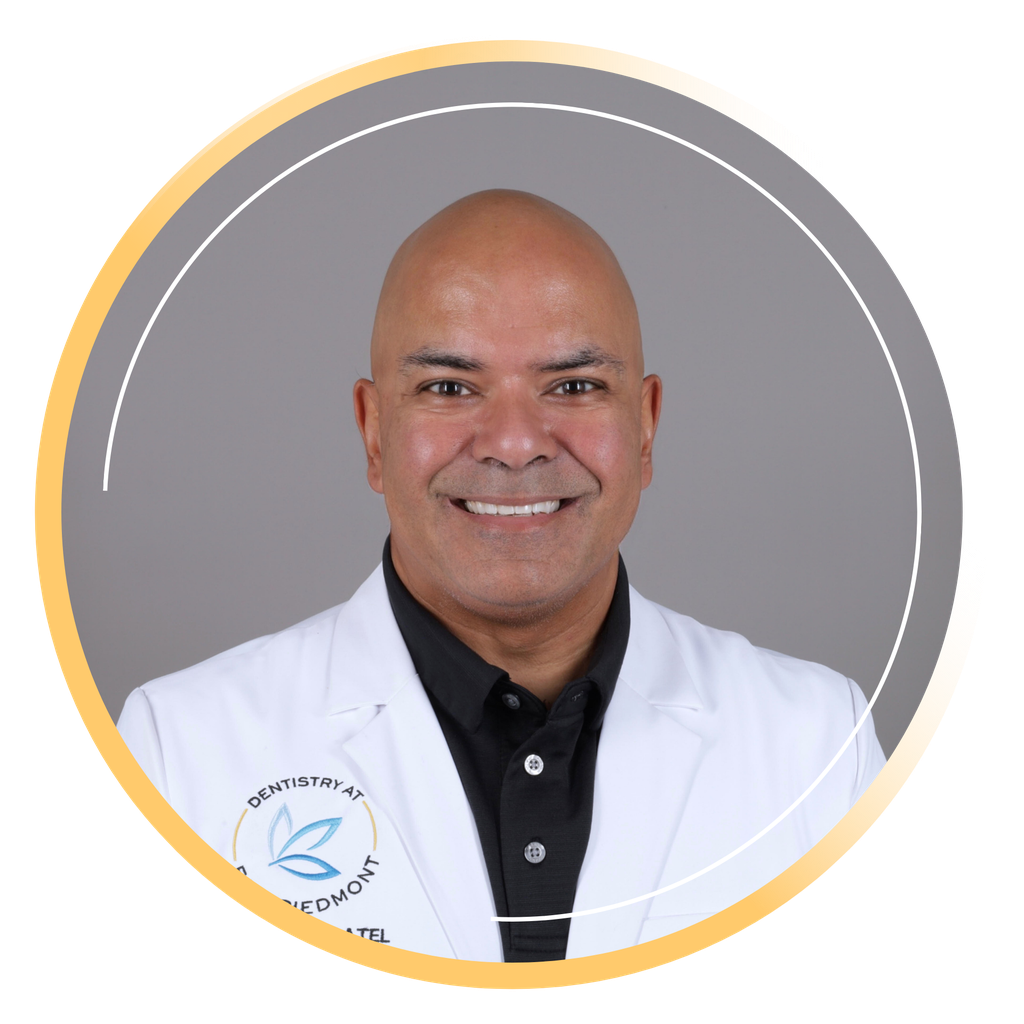
Dr. Ashish Patel
Oral appliance therapy works best when diagnosis, design, and follow-up stay connected.
Founded 2001 · Dental sleep medicine · Coordinated medical workflow
Dr. Patel leads every sleep apnea oral appliance case at Dentistry at East Piedmont, from the first conversation to the fitted appliance and follow-up. He coordinates with a sleep physician for diagnosis, medical treatment planning, and appliance fabrication, so you are not left to navigate the process alone.
This is not a one-size-fits-all mouthguard. Your appliance is custom-made to your bite, adjusted over time, and followed with testing so your care is based on more than how it feels subjectively.
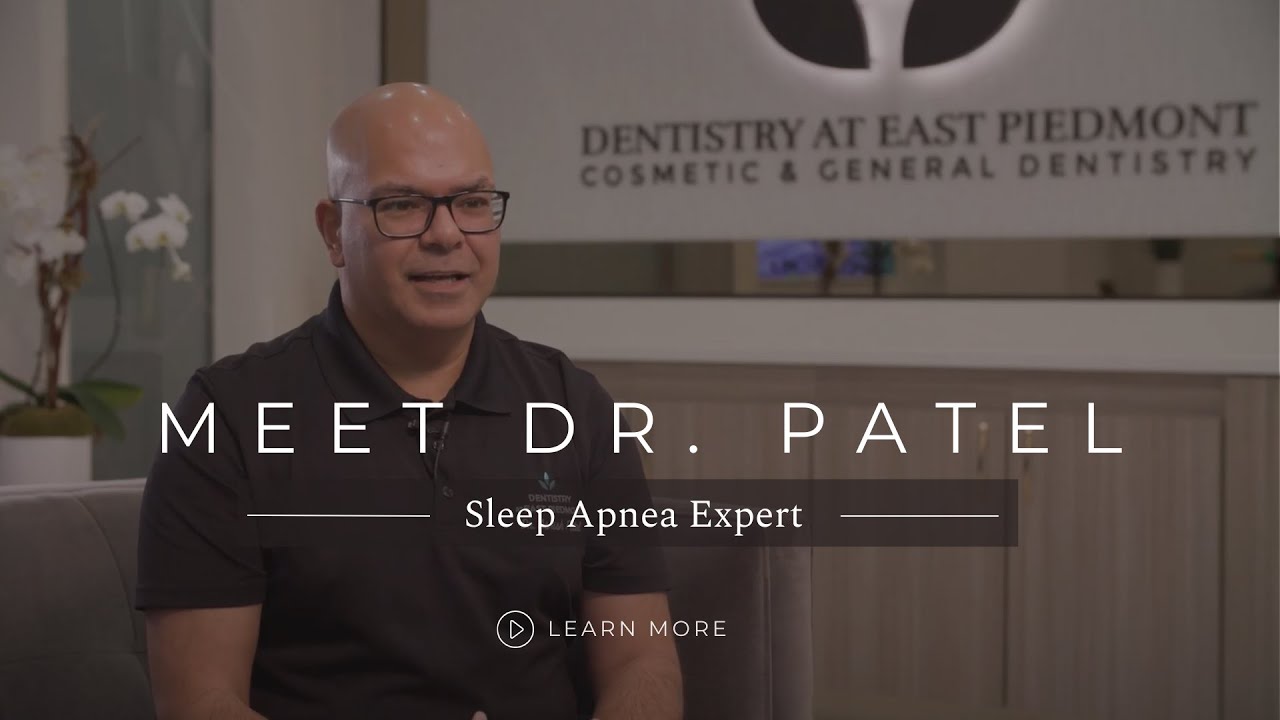
Hear Dr. Patel Explain the Sleep Apnea Process
In this short video, Dr. Patel explains how dental sleep medicine works at Dentistry at East Piedmont, why diagnosis starts with a sleep study, and how a custom oral appliance can become a more livable option for patients who struggle with CPAP.
If you are comparing CPAP with oral appliance therapy, this is a good place to understand the process before you request an appointment.
Investment and Medical Insurance
Oral appliances for sleep apnea are often handled through medical insurance, not dental. Sleep apnea is a medical condition, so the appliance flows through your medical plan differently than routine dental treatment. Medicare and many major medical plans may contribute when oral appliance therapy is prescribed for diagnosed sleep apnea.
We file as a courtesy when applicable and make every effort to estimate your portion before treatment. Insurance estimates are not a guarantee of payment. The final coverage decision always comes from your carrier and your plan contract.
For diagnosed obstructive sleep apnea, Dentistry at East Piedmont is able to work with Medicare for eligible custom oral appliance therapy. This applies to sleep apnea appliances only. It does not mean we are a Medicare or Medicaid provider for routine dental care or other dental services. Medicare may cover a custom mandibular advancement oral appliance when it is medically necessary, ordered after a qualifying sleep study, and provided under Medicare's requirements. For many patients, out-of-pocket costs can be lower than expected, especially when Medicare and any secondary coverage apply. Your exact portion depends on your plan, deductible, coinsurance, and whether you have Original Medicare or a Medicare Advantage plan.
Request a Free Sleep Apnea Consultation
Tell us about your situation. A team member will call you back to set up your free consultation. No obligation, no CPAP-required pitch.
Thanks. We'll be in touch.
A team member will reach out within one business day to set up your free consultation. If your situation feels urgent, call or text the office directly at (770) 321-5558.
Something went wrong.
We couldn't submit your form just now. Please try again in a moment, or reach out directly: (770) 321-5558.
Or take the 60-second quiz first if you'd rather self-screen before reaching out. You can also call or text the office at (770) 321-5558.
Sleep Apnea Questions, Answered
How is an oral appliance different from a CPAP machine?
A CPAP machine pushes pressurized air through a mask to keep your airway open. An oral appliance is a custom-fit device, about the size of a sports mouth guard, that shifts your lower jaw slightly forward during sleep so the airway stays open on its own. No mask, no hose, no electricity, no noise.
Will an oral appliance work for severe sleep apnea?
Oral appliances are most effective for mild to moderate obstructive sleep apnea. For severe cases, CPAP is usually the first-line treatment. That said, many patients with severe apnea who can't tolerate CPAP are candidates for an oral appliance under their sleep physician's supervision. We evaluate fit during your consultation.
Do I need a sleep study first?
Yes. A diagnosis from a sleep physician is required before an oral appliance can be prescribed. If you don't have one, we coordinate the study through the sleep physician we partner with. The test is a simple home sleep test that ships to your door; you don't have to spend a night in a sleep lab.
Is oral appliance therapy covered by insurance?
Often yes, but through medical insurance, not dental. Sleep apnea is treated as a medical condition, so coverage typically flows through your medical plan rather than your dental benefits. Medicare and many major medical plans may contribute when oral appliance therapy is prescribed for diagnosed sleep apnea. We file as a courtesy when applicable and make every effort to estimate your portion, but estimates are not a guarantee.
Does Medicare cover sleep apnea oral appliances?
Often, yes. Medicare may cover eligible custom oral appliances for diagnosed obstructive sleep apnea when the appliance is medically necessary and supported by a qualifying sleep study. This is medical coverage for sleep apnea appliances only. Dentistry at East Piedmont is not a Medicare or Medicaid provider for routine dental services. Patients with Original Medicare typically pay their Part B deductible and coinsurance for covered durable medical equipment. Medicare Advantage plans may handle coverage differently, so benefits and out-of-pocket costs depend on the specific plan.
How long does it take to get used to wearing it?
Many patients adapt within a few nights. Some experience mild jaw soreness or extra salivation for the first week, both of which fade quickly. The contrast with a CPAP mask can be meaningful for people who have struggled to wear it consistently.
Can I just buy one over the counter?
Not recommended. Over-the-counter sleep guards are not custom-fit, are not designed to treat diagnosed sleep apnea, and can move teeth or worsen bite problems over time. A medical-grade oral appliance is prescribed for a diagnosis, custom-made to your bite, and adjustable so it can be tuned during follow-up.
Will it stop snoring?
Usually yes. Snoring is caused by the same airway narrowing that drives sleep apnea, so the same mechanism that opens the airway for breathing also quiets the snoring. Most partners notice a dramatic difference within the first few nights.